Slab Leak Detection Pinewood WA: Ramblers and Condo Units on Concrete
Warm floor patch or a spinning meter? First learn whether your house is even on a slab, then how we find leaks without tearing up floors.
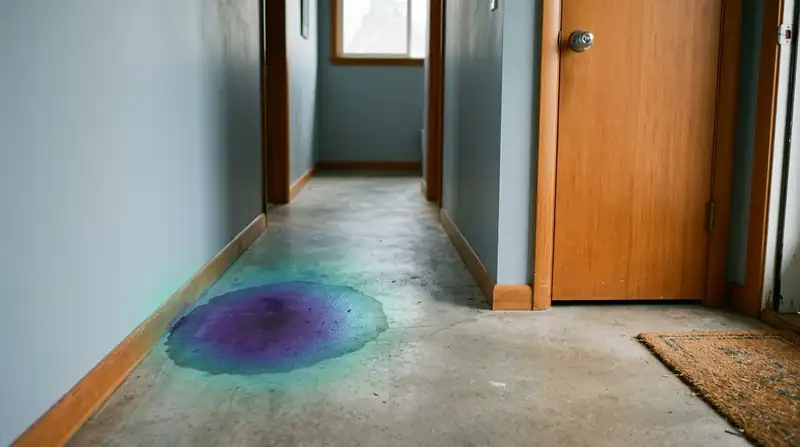
A warm patch on the hallway floor, a meter that spins with every tap off, a hot water heater that never stops. Slab leak detection Pinewood WA homeowners need has one first question: is your house even sitting on a slab?
Many are not. Here is how to tell, and how we find a leak under concrete without tearing up your floors.
Call (360) 925-8015 now. Tell us what you see or hear on the floor, and we tell you whether it sounds like a slab leak.
Call (360) 925-8015
Slab leak detection near Pinewood WA: does your house even have a slab?
A slab leak is a leak in a pipe that runs under or inside the concrete floor. If your house sits on a crawl space, the pipes are exposed and you have a different, easier problem.
Many homes in Pinewood are ramblers from the 1950s to the 1970s, and the median build year is roughly 1976. Many Pacific Northwest ramblers of that era have crawl spaces. Some are slab-on-grade, especially additions, garages converted to rooms and ground-floor condo units.
Pinewood Condominiums at 8217 51st Avenue NE was built in 1968, per Apartments.com, with 8 units over 2 stories. We do not know how its floors are built, so ask your HOA or look for a crawl space hatch in a closet or hallway.
Quick check: walk the house. A hatch in a closet or the garage, and vents around the foundation, mean a crawl space. No hatch and a flat concrete floor under the carpet often mean a slab.
Six signs of a slab leak in a Pinewood rambler or condo
- A warm or hot spot on the floor. Hot water lines leaking below the surface can warm the concrete.
- The sound of running water when every fixture is off.
- A meter that moves with everything shut off. The Marysville's own leak FAQ shows the check.
- Damp carpet edges, floor coverings lifting or a musty smell near baseboards.
- A water bill that jumps with no change in how you live.
- Low hot water pressure, or a water heater that seems to run constantly.
Any one of these can have another cause. A leaking toilet flapper mimics a running meter, for example. We rule out the easy causes first, so you do not pay to look under concrete for a toilet problem.
Questions to ask any slab leak detection company Pinewood WA homeowners hire
Ask which methods the slab leak detection contractor Pinewood WA homeowners hire will use and whether more than one has to agree before anyone touches the floor. Ask what the visit costs before it starts, and check the contractor's license, bond and insurance on the L&I contractor lookup before anyone comes in.
How we find a slab leak without breaking your floor
Slab leak detection in Pinewood WA follows a set order. We cut down the guesswork before we use any equipment.
- Pressure test. We isolate the system and pressurize the lines. A dropping gauge tells us there is a leak and, by separating hot and cold, which line has it.
- Acoustic listening. A ground microphone picks up the hiss of water forcing through a pinhole. We mark where the sound peaks on the floor.
- Thermal imaging. For hot lines, an infrared camera shows warm patches where heated water warms the concrete.
- Moisture readings. A meter checks carpet, baseboards and subfloor for damp near the suspect spot.
Two or three of these should agree on the same location. If they do not, we say so, and we do not cut a floor on a hunch. That approach keeps repair work targeted, and it can open the door to rerouting a line through walls or attic instead of opening the slab.
What causes a slab leak: pipe age, pressure and shifting soil
Slab leaks come from corrosion, abrasion where a pipe rubs concrete, and soil movement. Copper supply lines from the 1960s and 1970s can wear from the inside over decades. If your home was built between about 1978 and the mid-1990s, polybutylene pipe is possible, and it can crack from reaction with disinfectants, according to NACHI's polybutylene overview.
Water pressure adds stress. Code generally calls for a pressure reducing valve when pressure tops 80 psi, and we check it during a visit. We do not have a verified Pinewood soil report, so we will not claim a local soil cause.
Condo owners on 51st Avenue NE: who handles a slab leak in your unit?
For slab leak detection Pinewood Marysville WA condo owners need, your HOA documents decide. In a condo, some water lines belong to you and some to the association. A leak that runs under a shared slab may be the association's problem, and one under your unit may be yours.
Call the HOA or property manager before we open anything. We shut off the right valve, so you do not lose water for the whole building. We also give you a written description of where the leak is and what we found, and you can share it with the association.
What slab leak detection costs and what comes after
Detection finds the leak. It does not fix it, and we say so before we start. Slab leak detection 98270 homeowners book with us starts with a phone estimate.
In our area slab leak detection often lands in the mid hundreds. A house with more than one leak, a hard-to-hear pipe or a large footprint costs more. Exact depends on access and how many lines we test, so call and we tell you before we start.
A slab leak detection service Pinewood WA homeowners call should tell you the repair options first
After we find the leak, the choices are usually one of three: reroute the line through walls or the attic, open a small section of slab and repair the pipe, or replace the run. We explain each with what it disturbs. See our whole-house repiping page if the pipe is at the end of its life. For small leaks in copper, pinhole leak repair is a different path.
What the City of Marysville tells customers who cannot see the leak
There is no Marysville slab leak news story we could verify. This is official city guidance, and it is not a Pinewood incident.
Scene. The city's public FAQ asks the question directly: how can I locate a water leak? Problem. Not every leak leaves a puddle, and under-floor lines never show.
Tension. The city's steps cover exactly that gap. Check whether the meter dial is moving, which may take 5 to 10 minutes. Listen for faint rushing water, possibly using a metal rod as an acoustic tool. Look for wet spots or abnormally green grass. Turn off isolation valves on branch lines to narrow the location.
What happened. The FAQ tells customers to contact Public Works at 360-363-8100 or hire a plumber for professional leak detection when the search hits a wall.
Outcome. After repair, it says to call Utility Billing at 360-363-8001 about a possible bill adjustment. It also says to call before you dig.
Lesson. A slab leak is the same problem with concrete on top. The listening and isolating steps work here, with better gear. A Pinewood homeowner should start with the meter and call us when it moves. The full text is in the Marysville's own leak FAQ. For the wider picture, see hidden leak detection in Pinewood or go back to the homepage.
Call (360) 925-8015 now. Tell us whether the meter moves with the water off, and we tell you what to check next.
Call (360) 925-8015
What Pinewood homeowners ask about slab leaks
What does a hot spot on my floor mean?
A hot spot can mean a hot water line leaking below the surface, or it can be a heating duct or a sunny window. If the spot stays warm with the heating off and the meter moves, call us. Do not cut into the floor.
How do I know if my house is on a slab or a crawl space?
Look for an access hatch in a closet, hallway or garage, and vents low on the foundation wall. A hatch means a crawl space. A flat concrete floor under the carpet often means a slab. Permit records at Marysville Building Services, 360-363-8000, may also show it.
Should I shut off the water while I wait?
If the meter runs fast, or you see wet floors, close the main. For a slow leak, close it at night and leave it on in the day. If the leak is on the hot side, turn the water heater off and shut off the hot supply.
Can a slab leak wait until I sell the house?
We would not wait. A leak keeps costing you in water, and it can wet the subfloor and grow mold. It may also show up in a buyer's inspection. Finding it is a small step next to what a long-running leak can do.
How much does slab leak detection cost?
In our area it often lands in the mid hundreds. A house with more than one leak, a hard-to-hear pipe or a large footprint costs more. Detection finds the leak and does not fix it. Call, and we give you the range before we start. See our cost guide.
Does insurance cover slab leak detection?
Some policies cover the cost of finding a leak, or the tear-out to reach it, when resulting damage is covered. Many do not cover a slow leak. Policies vary, so call your insurer. We give you a written description of where and when.
Do you have to break the concrete to find the leak?
No. Finding a slab leak uses pressure tests, acoustic listening and thermal imaging from above the floor. Repair may need a small opening, or we may reroute the line. We tell you which before we start work, and we explain what it disturbs.
How do I know the leak is really under the slab before anyone cuts?
Two or three methods should agree on the same spot, and the meter test should support it. If they do not agree, we say so and do not cut on a hunch. Before anyone comes in, check the contractor with our license lookup guide.
Who handles a slab leak in a condo?
Your HOA documents decide. Lines that serve only your unit are usually yours, and shared risers and building lines belong to the association. Call your HOA before we open anything, and we give you a written report of what we found.
Does Marysville need a permit to repair or reroute a slab leak line?
Repairing an existing pipe often does not, while replacing or rerouting larger sections can. Marysville Building Services at 360-363-8000 confirms for your address. We tell you on the phone whether your job needs one, and we pull it when it does.
Call (360) 925-8015